Verdwell One · The living pantry
One machine. Every climate.
Verdwell One is a living pantry designed as a sealed climate cell: the same machine for a wine cellar, a terrace or a desert house. Inside the glass, a robotic gantry pollinates, prunes and harvests a layered garden of tomatoes, peppers, herbs and greens, and sets the harvest in a drawer.
Free to join. No payment, no commitment.
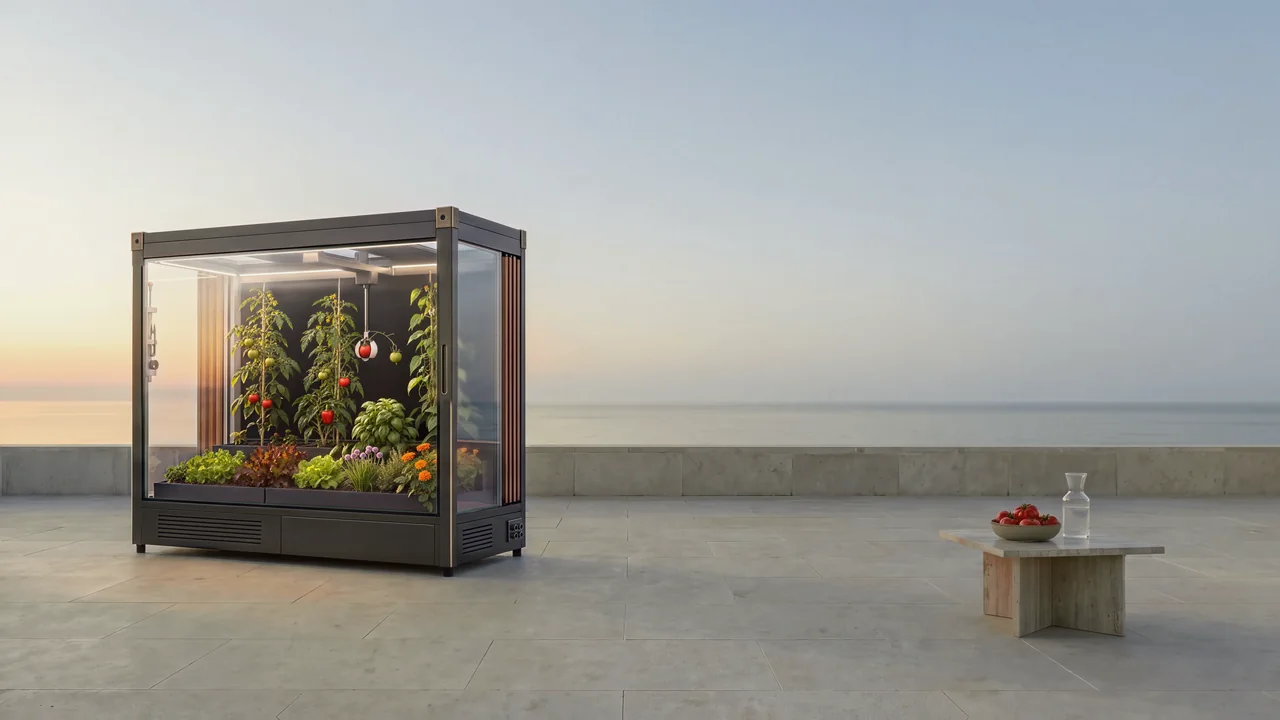
Fig. 01 — One Verdwell One, three climates: a terrace at dusk, a wine cellar and a desert house.
01What it is
A machine for growing what you cook
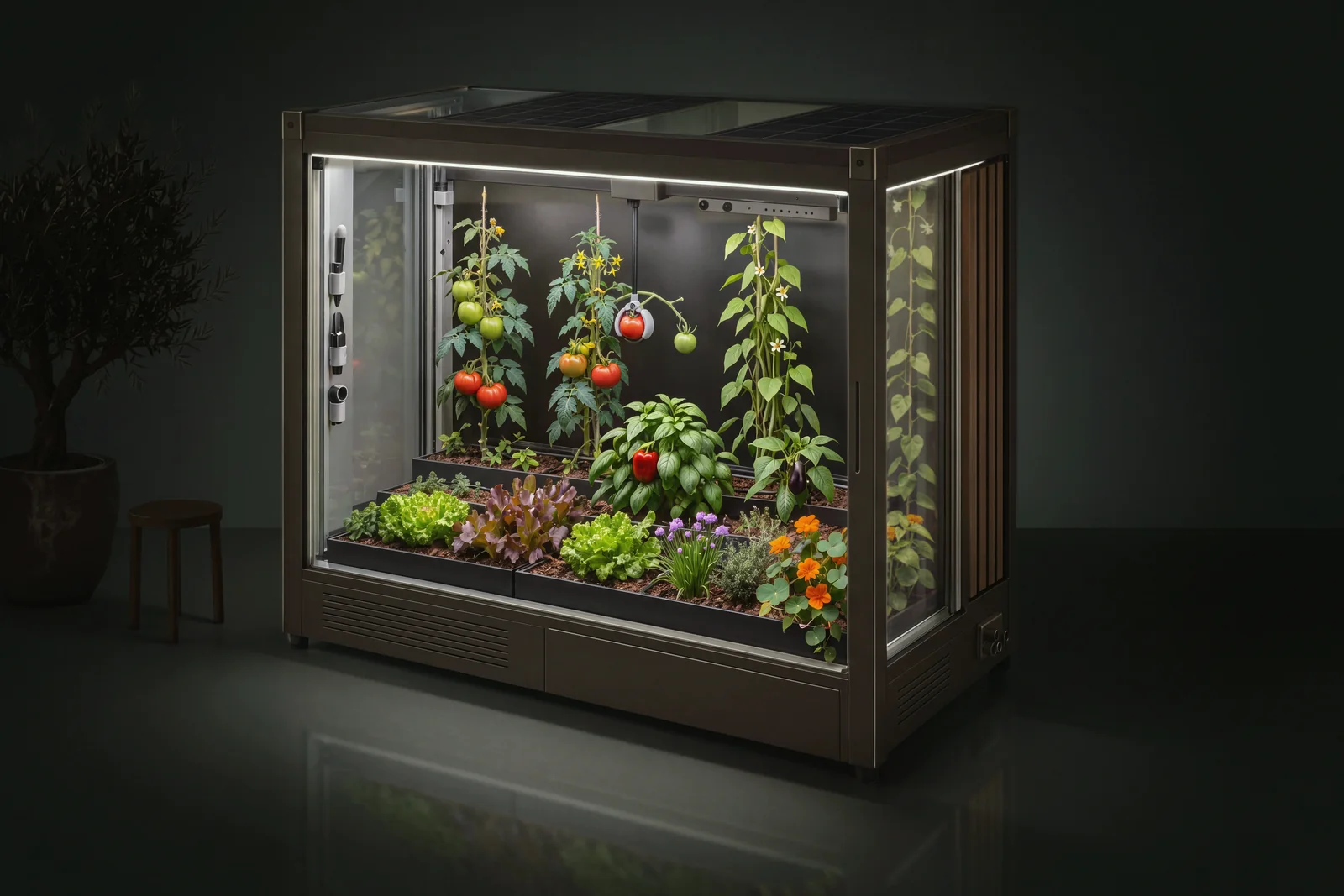
Verdwell One is a freestanding growing machine. Inside the glass, plants grow in layers the way a permaculture guild is planted. Tomatoes climb cords into the top light, peppers and herbs fill the middle, and greens, seedlings and companion flowers sit below. Grow lights, a water and nutrient core and a climate module keep them on schedule. A gantry robot with interchangeable tools does the reaching.
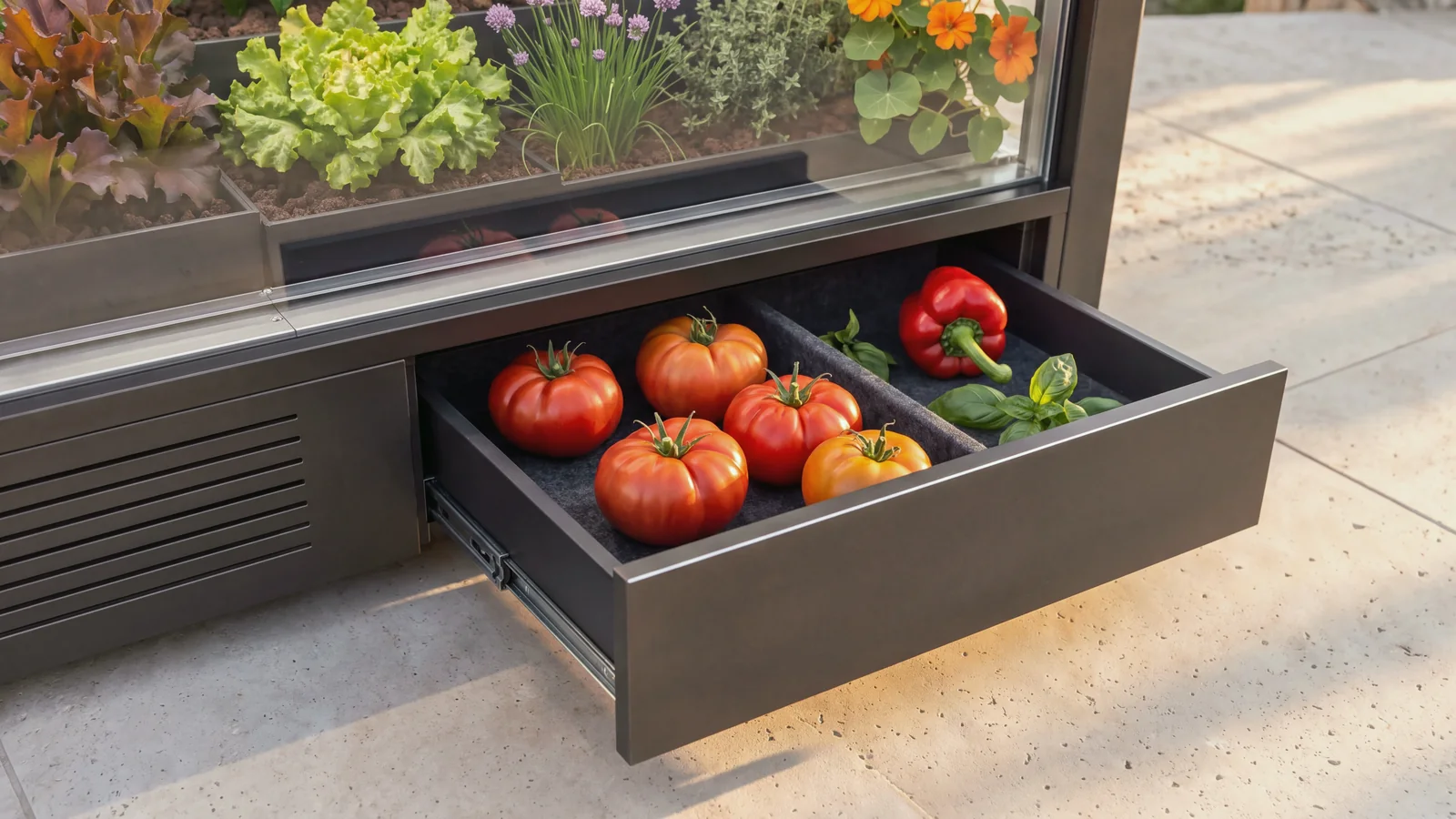
You choose the crops and load the starts. When a tomato is ripe, the gantry cuts it at the stem and lowers it through a padded hatch into the harvest drawer in the plinth. Dinner starts there.
- Made for the place it stands in.
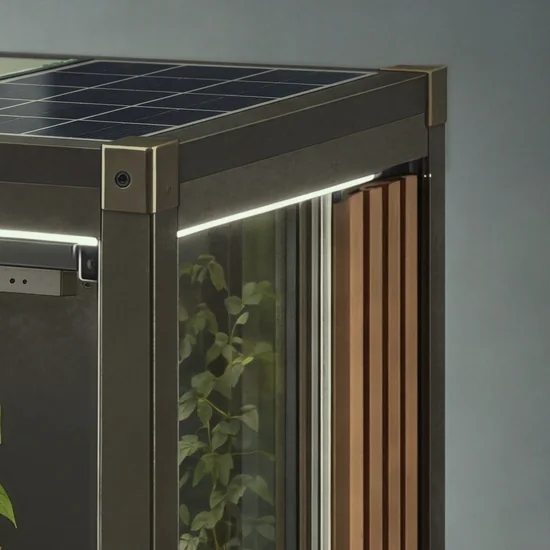
One frame, three finishes: fumed oak and black bronze for a wine room, ash and bronze for a terrace, ceramic and titanium for the desert.
- Takes on the routine.
Light, water, feeding, climate, pollination, pruning and harvest all happen inside the glass. You keep the parts you enjoy.
- Shows you everything.
Cameras photograph each plant every day. Scroll back through the season in the app and watch a flower become a tomato.
02Every climate
One machine. Every climate.
Verdwell One is designed as a sealed climate cell. Light, water, air and temperature are managed inside the glass, so the growing season travels with the machine. The frame is engineered the same for every place: for a wine cellar, a terrace by the sea or a desert house. The finish decides how it meets the room.
-
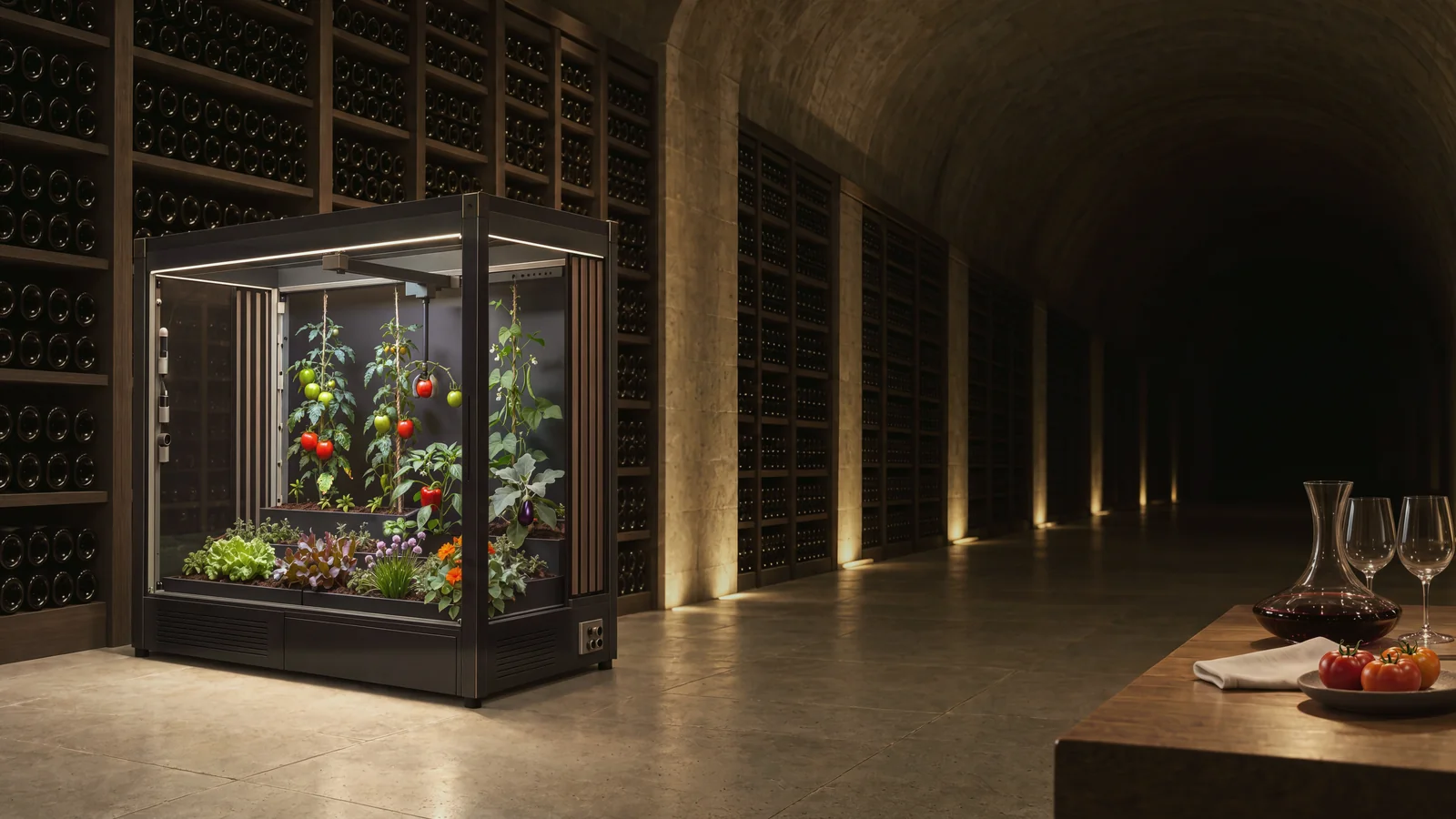
Fig. 04 · Cellar finish
Wine cellar
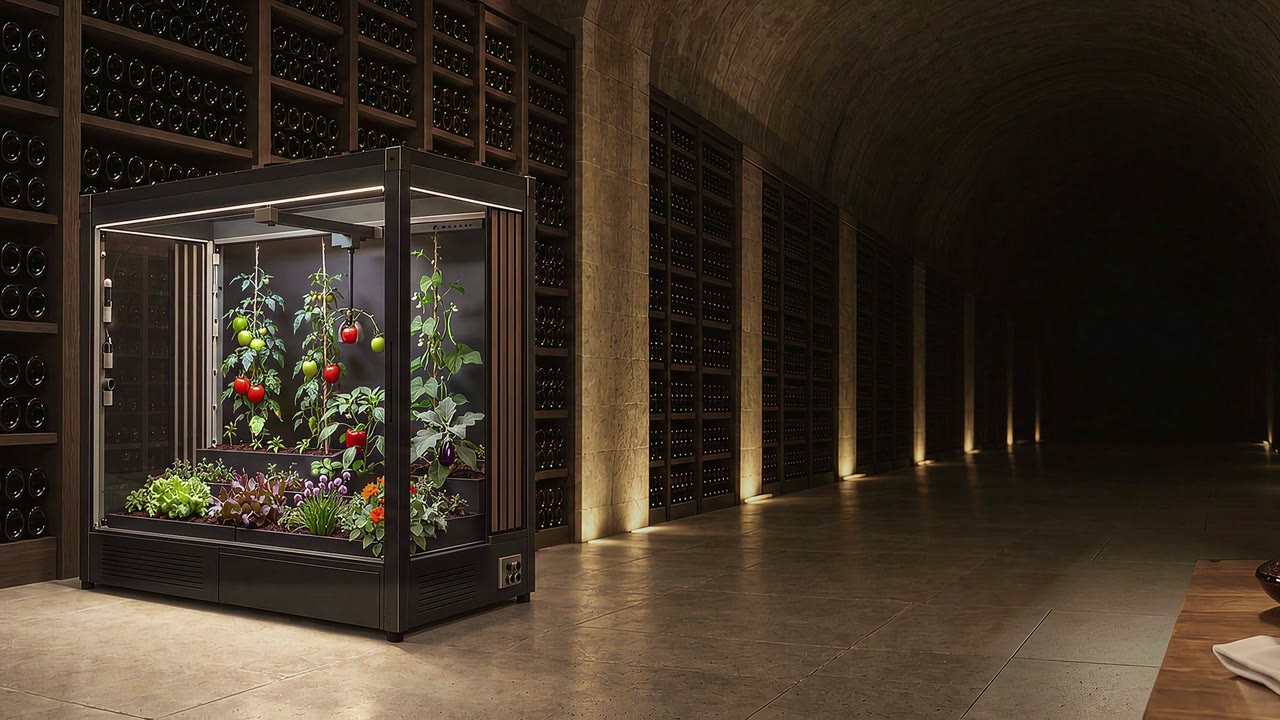
Fumed oak and black bronze among the racks. A light-tight roof keeps the grow light inside, and the cell is designed to keep its warmth and humidity to itself, away from the bottles.
-
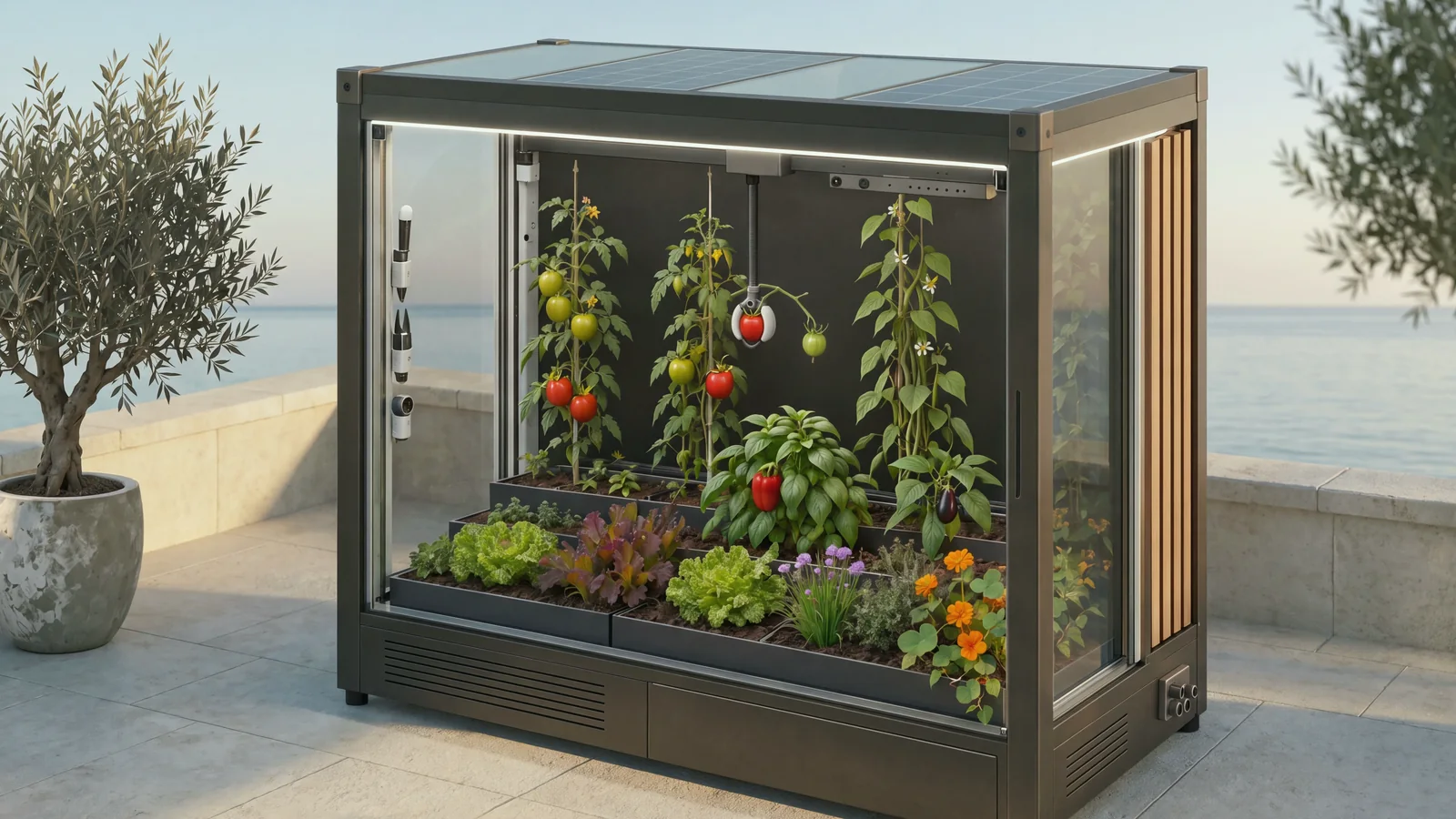
Fig. 05 · Terrace finish
Mediterranean terrace
Thermo-ash fins and dark bronze on a terrace above the sea. The roof alternates daylight glass and solar-cell glass and drains rain to a gutter, and the sealed joints are designed to ride out afternoon heat, sea wind and a cold night.
-
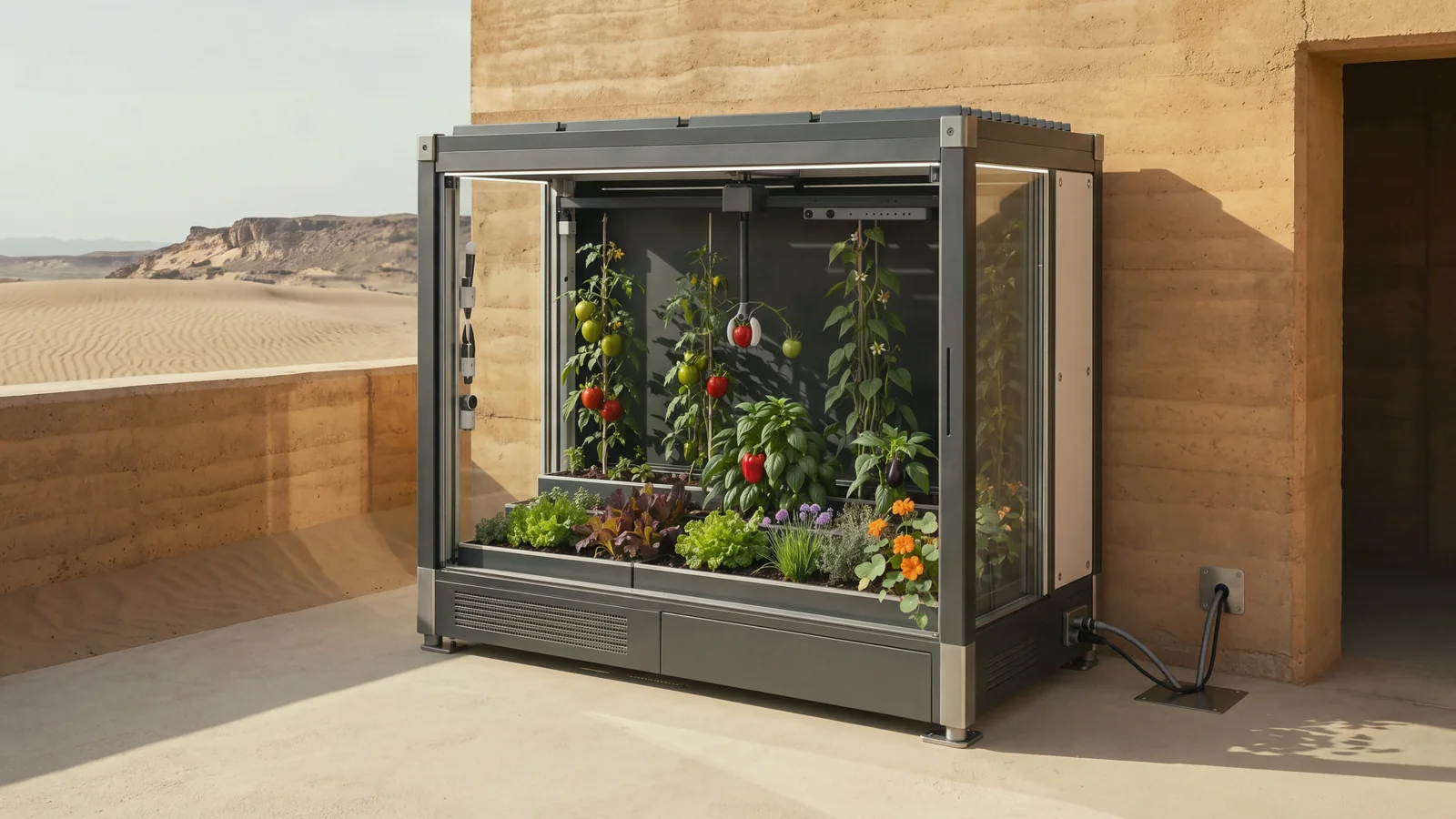
Fig. 06 · Expedition finish
Desert house
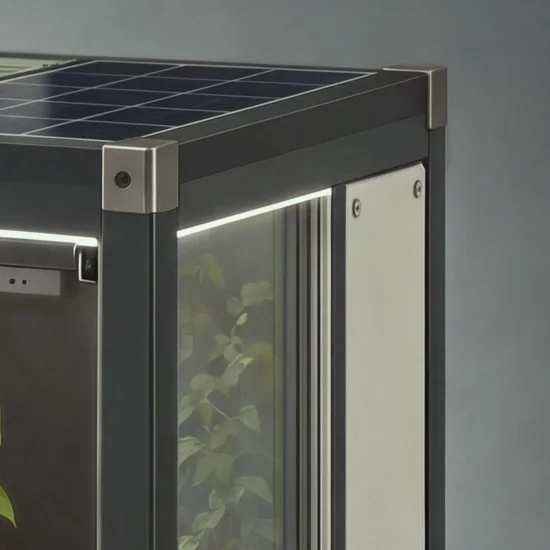
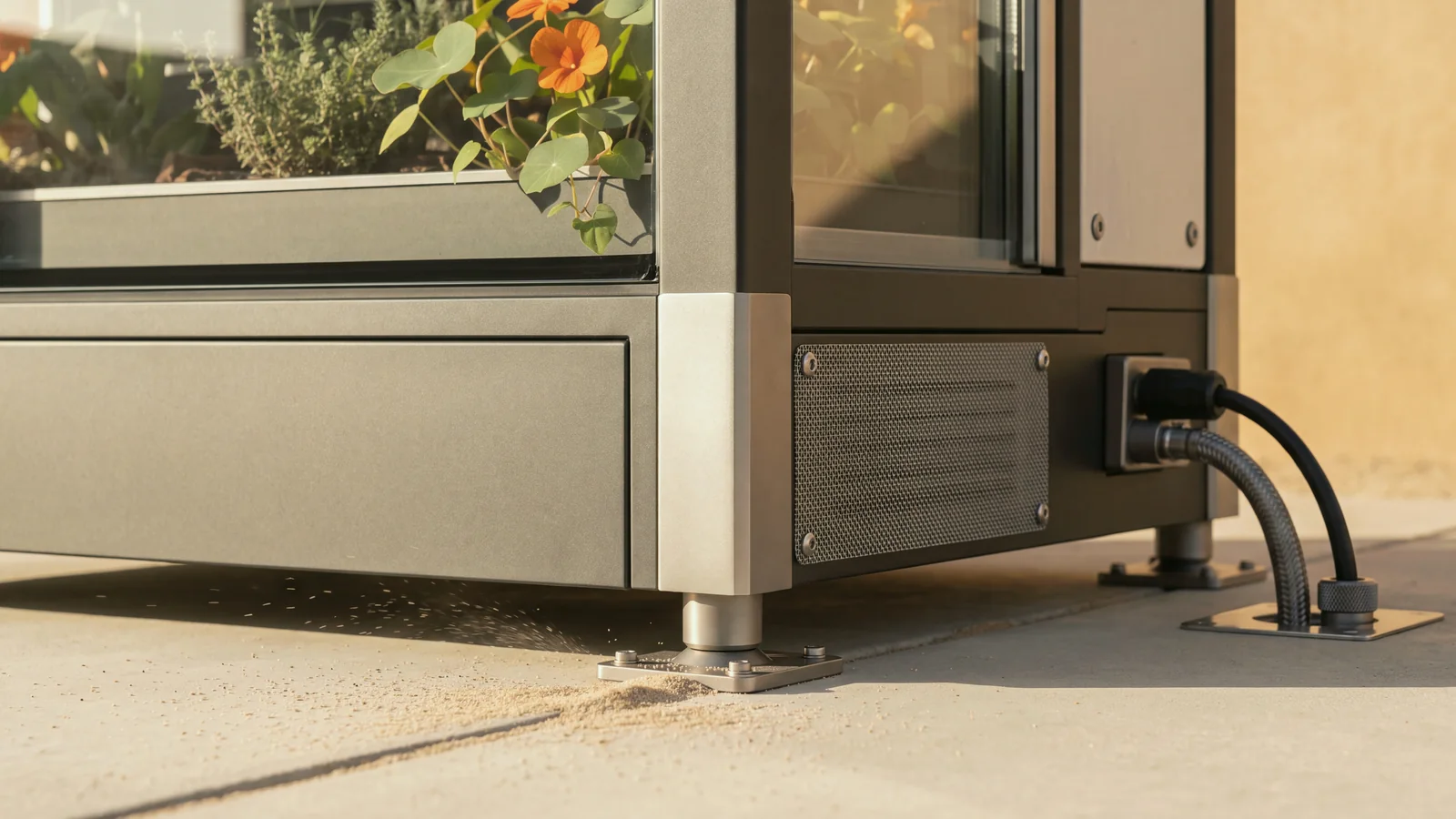
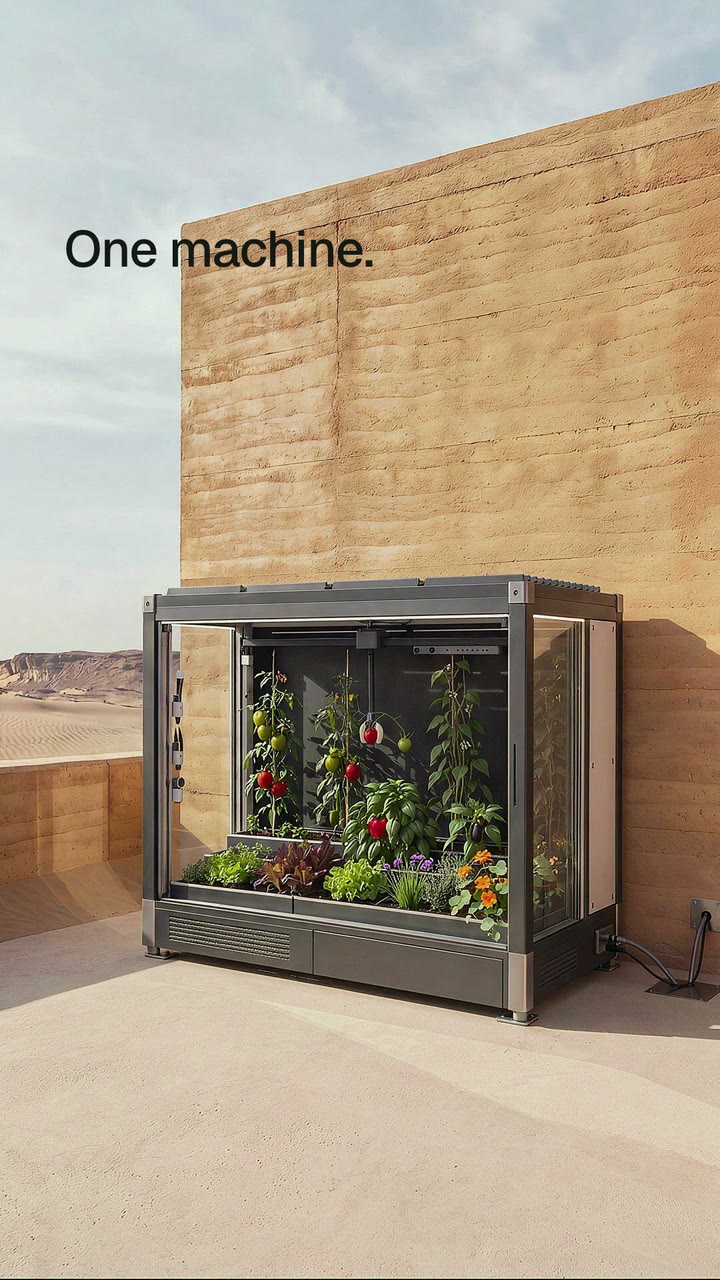
Pale ceramic panels and titanium fittings on a graphite frame, with a dust screen over the vents, under solar-cell glass and louvred daylight glass. It connects to the house's water and power at one coupling block, and it's designed to hold its own climate through the heat of the day and to keep its water inside, where it's collected and used again.
-
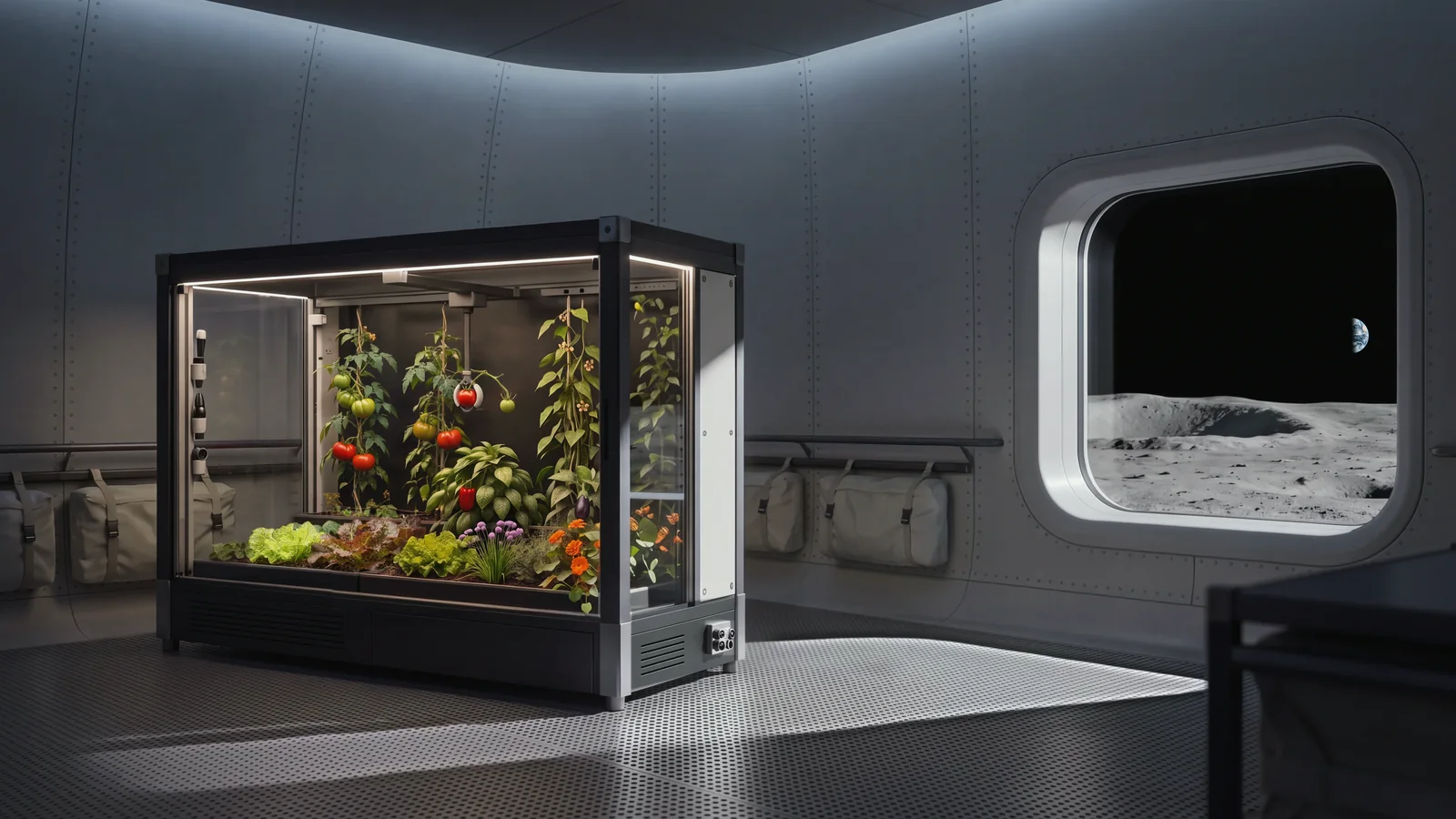
Fig. 07 · Expedition finish · Design vision
Lunar habitat
The same sealed cell, imagined in a lunar habitat module. A garden that keeps its own climate inside the glass is what a habitat would need. It's also the clearest picture of the idea behind Verdwell One.
03Automation
Automation you can watch
Everything that tends the plants lives inside the glass, where you can see it work. A gantry carries the tools. A vision bar, lenses in the frame and sensors watch every plant and tell the gantry where to go.
The gantry
Rails on the front and back top beams carry a bridge across the cell, and a compact carriage runs along the bridge. From the carriage, a slim carbon tube lowers the tool head to any plant, so the robot never takes space from the garden. Spare tools wait in a dock on the front-left post, and the head changes tools there.
- 01Pollinator. A slim wand with a soft tip. Tomato and pepper flowers release pollen when they vibrate. A sealed cell has no bees and no wind, so the pollinator taps each open truss.
- 02Pruner. Small shrouded snips remove side shoots and spent leaves, so light reaches the fruit.
- 03Harvester. Two soft pads close around a ripe tomato and a blade cuts the stalk. The gantry lowers the fruit through a padded hatch in the front bed into the harvest drawer.
- 04Lens head. A close-up camera for a careful look at a leaf, a flower or a fruit.
- 01 · Change tools
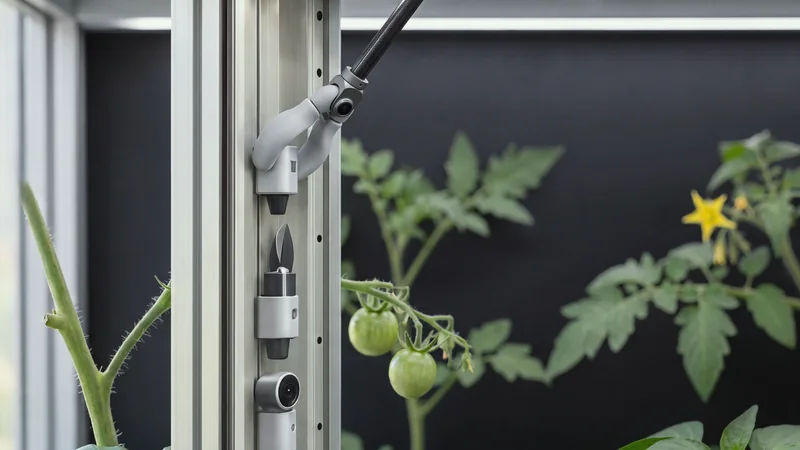
The head swaps tools at the dock.
- 02 · Pollinate
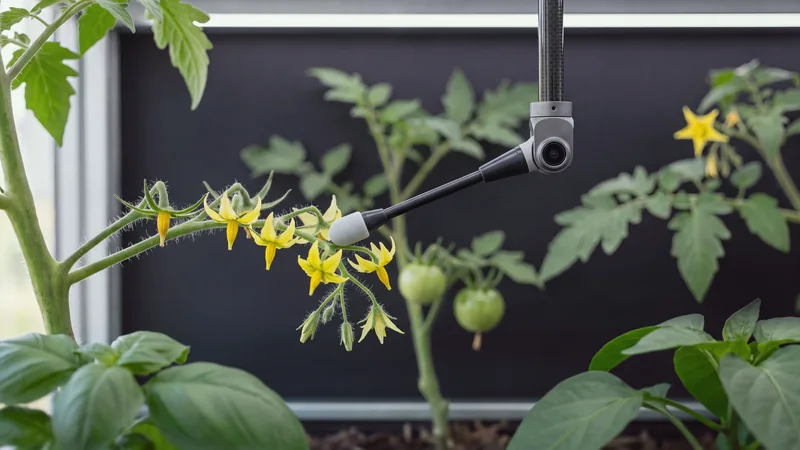
The wand taps each open truss.
- 03 · Prune
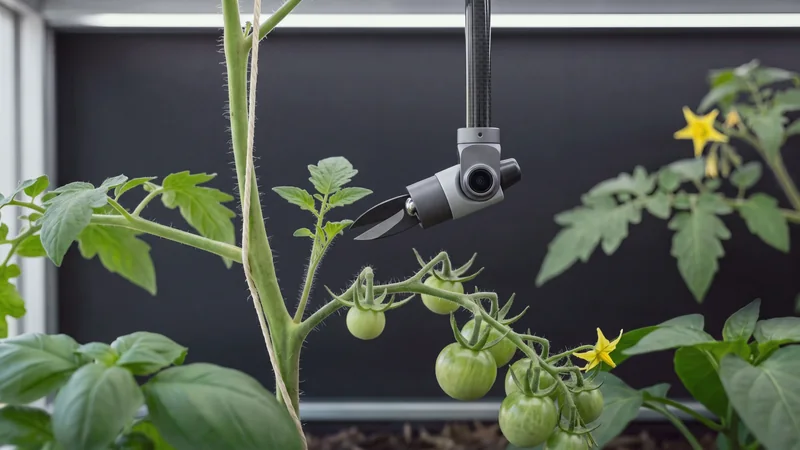
The snips take side shoots and spent leaves.
- 04 · Harvest
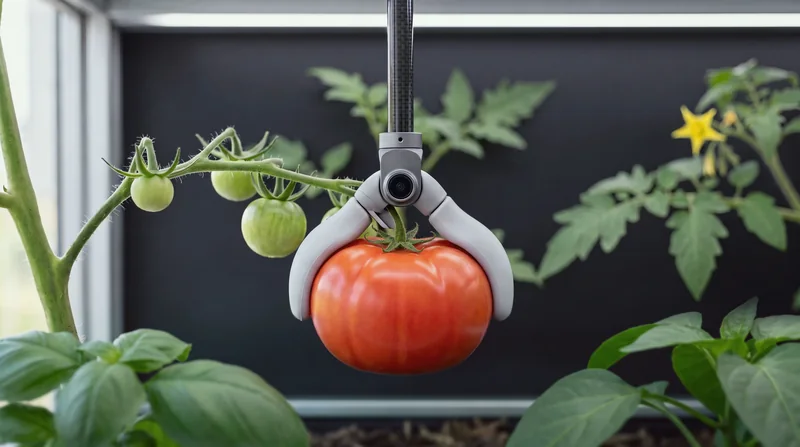
Two soft pads cup the ripe fruit.
Vision and sensing
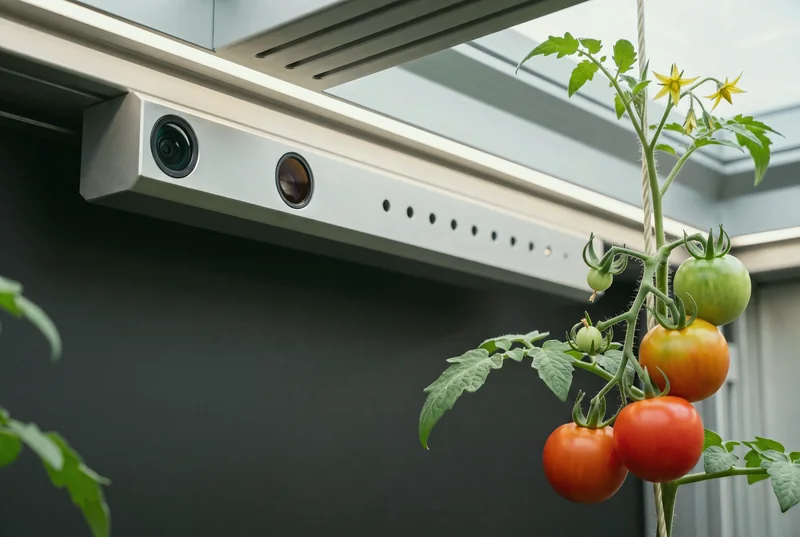
A vision bar with two lenses on the back beam, lens windows in the corner blocks and a lens in the gantry's wrist photograph every plant each day. Sensors read temperature, humidity, CO₂, light, water level and nutrient strength. Together they find open flowers and ripe fruit, guide the tools, estimate what's ripening next and tell you when something needs a person.
- CAM 01Vision bar
- CAM 02Corner lenses
- CAM 03Wrist lens
- TEMPTemperature
- RHHumidity
- CO₂Carbon dioxide
- PARLight
- LVLWater level
- ECNutrient strength
What Verdwell One handles
The routine work of growing happens inside the glass.
| Task | What Verdwell One does |
|---|---|
| Light | Runs the grow lights on each crop's schedule, adding to daylight through the roof on the Terrace and Expedition finishes |
| Feeding | Mixes nutrient solution from the cartridge and adjusts it from growth to flower to fruit |
| Water | Irrigates each layer; collects, filters and reuses return water |
| Climate | Heats, cools, ventilates and manages humidity inside the cell |
| Monitoring | Photographs every plant daily; tracks temperature, humidity, CO₂ and light; tells you when something needs a person |
| Pollination | Taps each open tomato and pepper truss with the pollinator |
| Pruning | Removes side shoots and spent leaves with the pruner |
| Harvest | Finds ripe fruit, cuts it at the stem and lowers it into the drawer. Any crop can be set to hand harvest instead. |
| Harvest forecast | Estimates what's ripening next, and when |
What stays with you: choosing the crops, and the cooking.
Care and cleaning are in the questions below.
04Permaculture inside
Planted as a guild
A permaculture guild puts plants together so each one uses the light, space and water the others leave. Verdwell One plants its cell the same way, in layers.
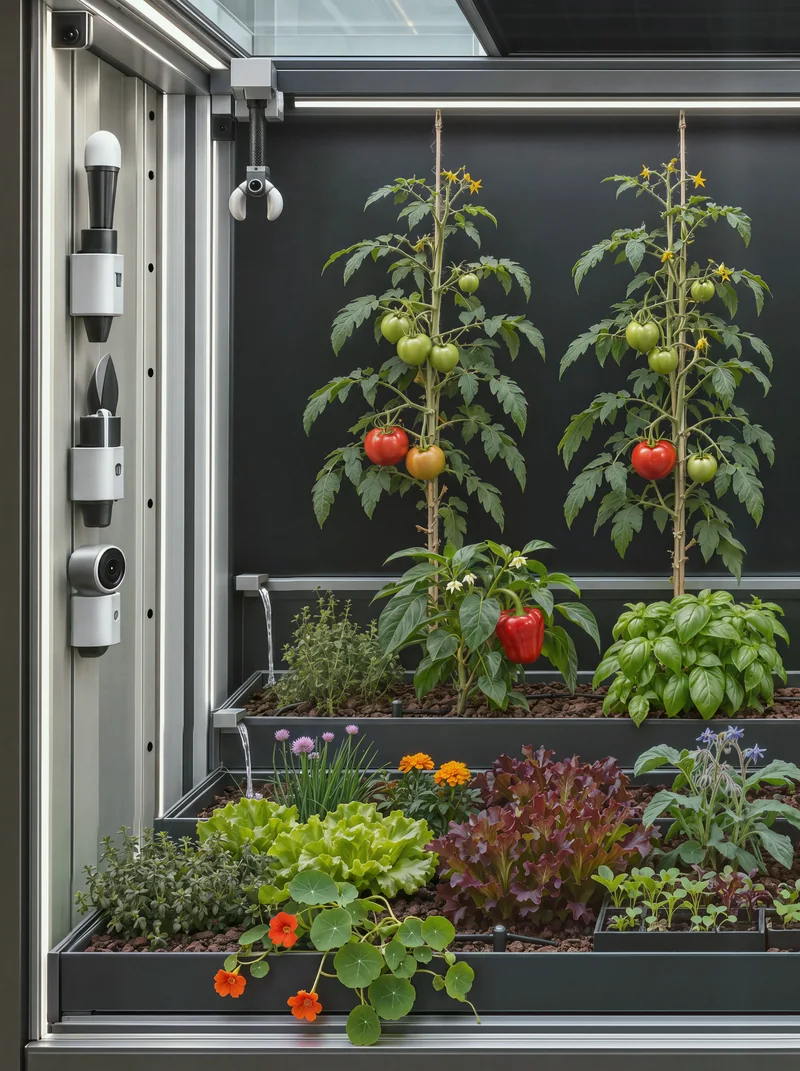
- 01
Canopy
TomatoesSolanum lycopersicumCompact varieties that carry full-size fruit, trained up taut cords into the top light.
- 02
Mid layer
Peppers and chiliesCapsicum annuumIn the warm air under the canopy, beside the tomatoes.
- 03
Herb layer
Basil, thyme, chivesBetween the fruiting plants and along the front of the beds, where you can cut what you need as you cook.
- 04
Ground layer
Lettuces, greens and seedlingsButterhead and oak-leaf lettuce in the front bed, in the cooler, softer light under the canopy, with seedlings raised for the next planting.
- 05
Companion flowers
Marigold, nasturtium, boragePlanted among the crops, the way a guild is planted, to fill the gaps at the front of the beds.
Verdwell One is planted for a kitchen, with a short list of crops chosen to grow well together.
The water cascade
Water moves down through the guild. The utility core in the plinth mixes nutrient solution from the cartridge, and drip lines feed each bed. What the roots don't take falls to the bed below and drains to the plinth, where it is collected, filtered and sent back to the core to be used again. On the Terrace and Expedition roofs, a gutter on the rear beam adds the rain.
The cell is layered by climate too. Warm air and the strongest light rise to the canopy, where fruit wants them. Cooler air and softer light settle below, where leaves do well.
Watch dinner take shape
The cameras that guide the tools also take a daily photograph of every plant. Each day's photograph is kept, so a whole season plays back in a few seconds.
05Function stacking
One part, several jobs
Function stacking is a permaculture rule: every element should do several jobs, and every important job should be done by more than one element. We hold each major part of Verdwell One to at least three jobs. That means fewer parts to service, and a second way to get the important work done.
Nine principal parts · three jobs each
Roof cassettes
- Admit daylight
- Add solar power
- Collect rain
In the Cellar finish, a light-tight cassette seals, insulates and keeps the grow light in.
Frame
- Carries the structure and the glass
- Holds the trellis cords and the beds in its slotted inner faces
- Carries the gantry rails and service lines
Gantry
- Pollinates
- Prunes
- Harvests
Vision bar and lenses
- Watches every plant
- Guides the tools
- Forecasts the harvest
Utility core
- Mixes nutrients
- Irrigates
- Filters return water
Grow modules
- Hold the plants
- Carry the drip lines
- Step down, so every layer gets its light
Trim cassettes
- Set the look
- Insulate
- Shade the back of the cell
Plinth
- Levels the machine on its feet
- Houses the utility core and the climate module
- Holds the harvest drawer, fed through a padded hatch in the front bed
Coupling block
- Water in and drain
- Power
- Data
Four quick-connect couplings in one block.
Every important job, two ways
| Job | First way | Second way |
|---|---|---|
| Light | Daylight through the roof | Grow lights |
| Power | Mains power | Roof solar, which supplements it |
| Water | The supply line | Rain from the roof, and return water used again |
| Harvest | The gantry | Your hands |
| Watching | The cameras | The glass front |
Daylight, solar and rain come through the Terrace and Expedition roofs. Under the Cellar finish's light-tight roof, the grow lights, mains power, the supply line and return water do the work.
06Finishes
One frame. Three finishes.
Every Verdwell One is built on the same engineered frame: the sealed cell, the gantry, the vision bar and lenses, the utility plinth and the beds. The finish is the part you live with: the frame colour, the trim cassettes, the glass and the roof cassettes. It's engineered for the hardest place and finished for the finest room.
- Cellar
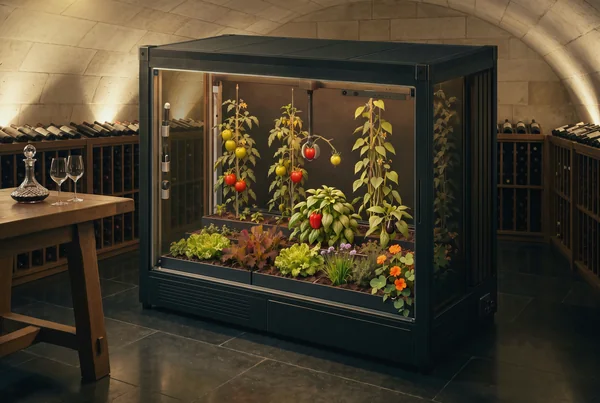
For the finest room
Black bronze, fumed oak and a light-tight roof, among the bottles.
- Terrace
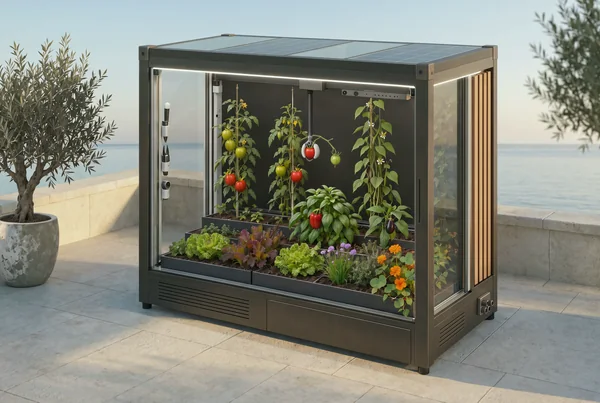
For life outdoors
Dark bronze and thermo-ash under a roof that takes the sun and the rain.
- Expedition
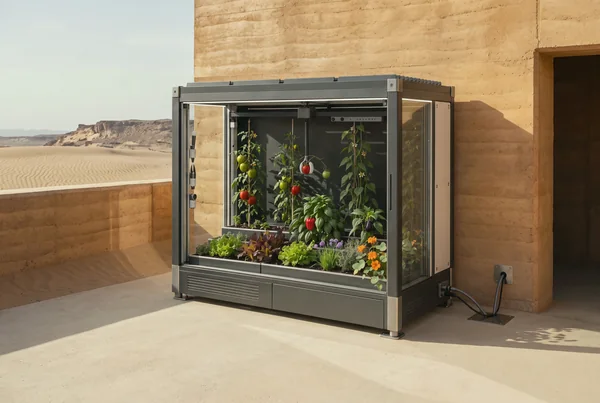
For the hardest place
Graphite, titanium and ceramic, with dust screens and louvred daylight glass.
- Cellar
- Terrace
- Expedition
| Finish | Where | Materials | Roof |
|---|---|---|---|
| Cellar | Wine rooms, dining rooms, kitchens and restaurants | Black-bronze frame, fumed-oak fins, faintly bronze-tinted glass | Four light-tight insulated cassettes |
| Terrace | Terraces, patios, rooftops and outdoor kitchens | Dark-bronze frame, oiled thermo-ash fins, clear low-iron glass | Daylight glass and solar-cell glass, alternating, with a rain gutter |
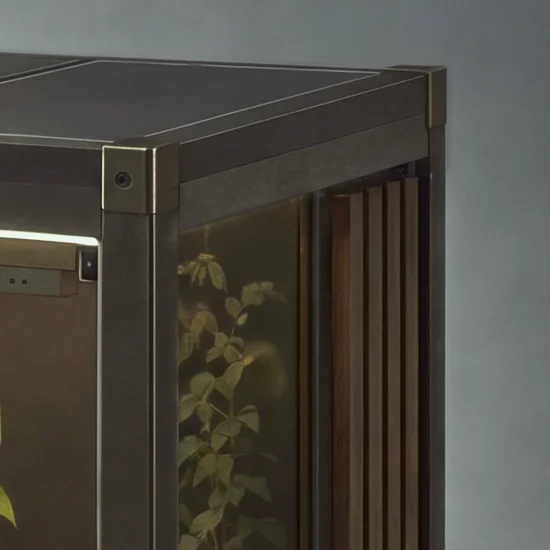
| Expedition | Desert houses, mountain and coastal properties, remote lodges and field stations | Graphite frame, titanium corner blocks, sleeves and fittings, pale ceramic panels, dust screens over the vents | Two solar-cell cassettes and two louvred daylight cassettes, with a rain gutter |
The trim cassettes are designed to come off the frame, so a Verdwell One can change finish when it changes rooms.
Built like an instrument
The same principles hold in every finish.
- 01A sealed cell. Thick insulated glass, edge seals and gasketed joints are designed to keep the garden's climate in and dust and weather out.
- 02Its own climate. Heat, cooling, humidity, light and water are managed inside the glass, from a cool cellar to a hot courtyard.
- 03Every important job, two ways. Light, power, water, harvest and watching each have a second way to get done.
- 04Serviceable in the field. Tools, beds, the utility core and every cassette come out as modules, and water, power and data connect at one block.
07Design & delivery
Made to sit beside your best things
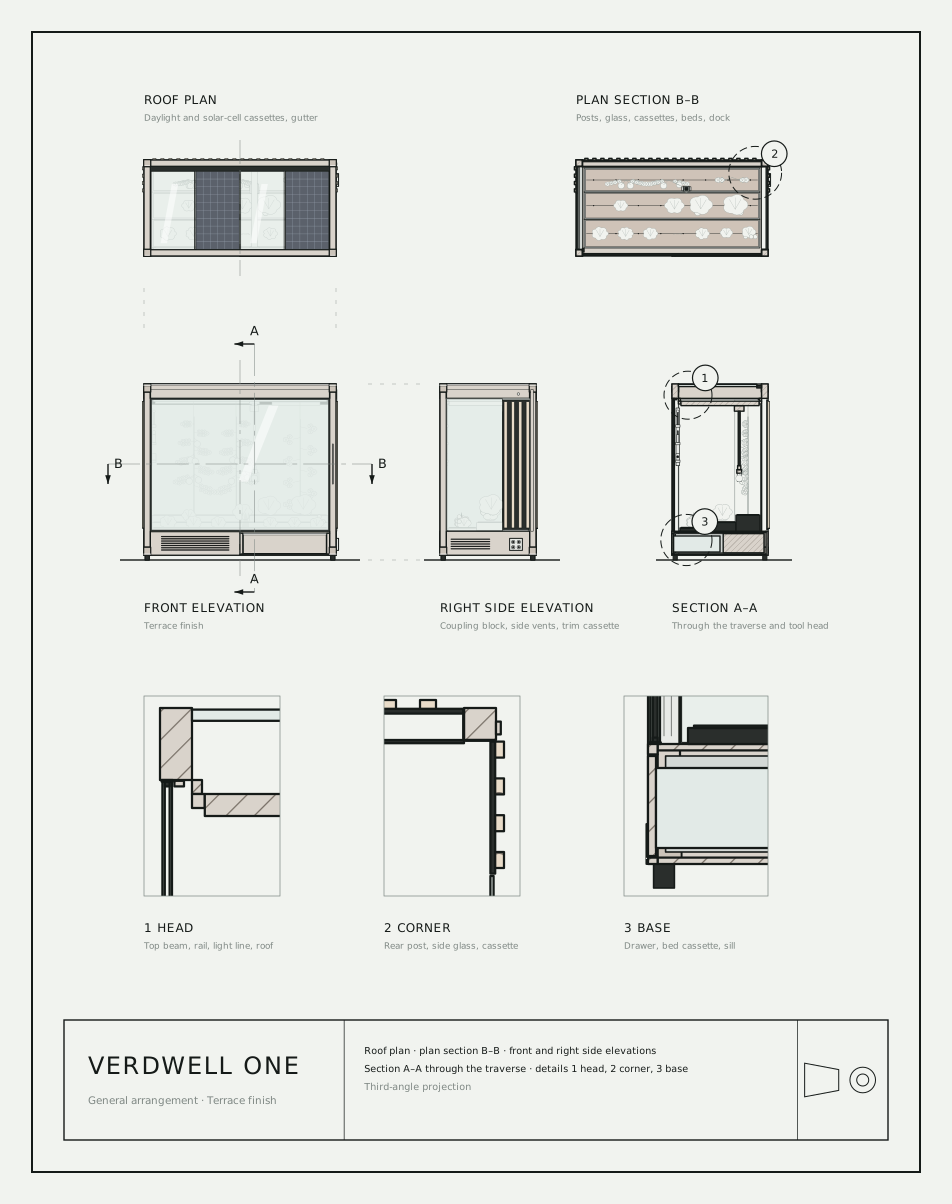
People who cook well care how their kitchen looks and how their tools are made. Verdwell One is designed as a system, checked as a measured drawing and built from parts that come apart. Every major part is modular and replaceable: the trim cassettes, the grow modules, the utility core, the gantry tools and the roof cassettes.
-
Fig. 13
Vision bar
Two lenses on the back beam watch every plant. Lens windows in the corner blocks and a lens in the gantry's wrist add more views.
-
Fig. 14
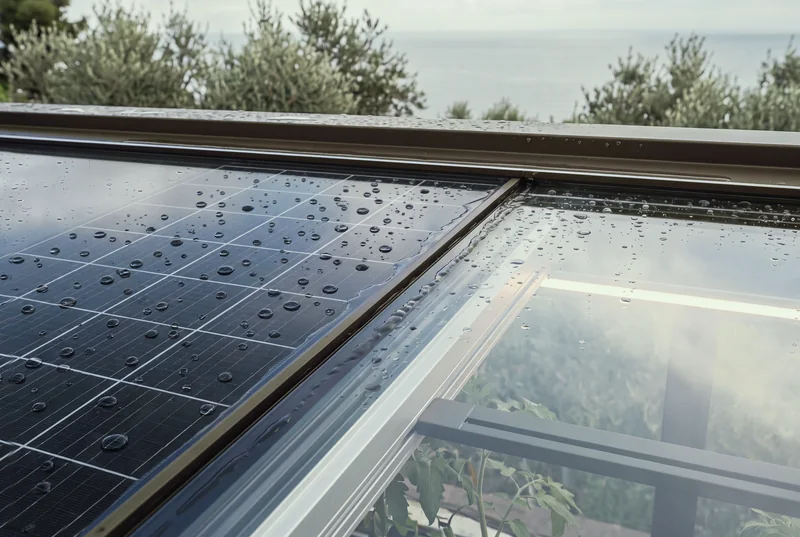
Roof cassettes
Solar-cell glass and daylight glass sit side by side in the roof, and rain runs off to the gutter on the rear beam.
-
Fig. 15
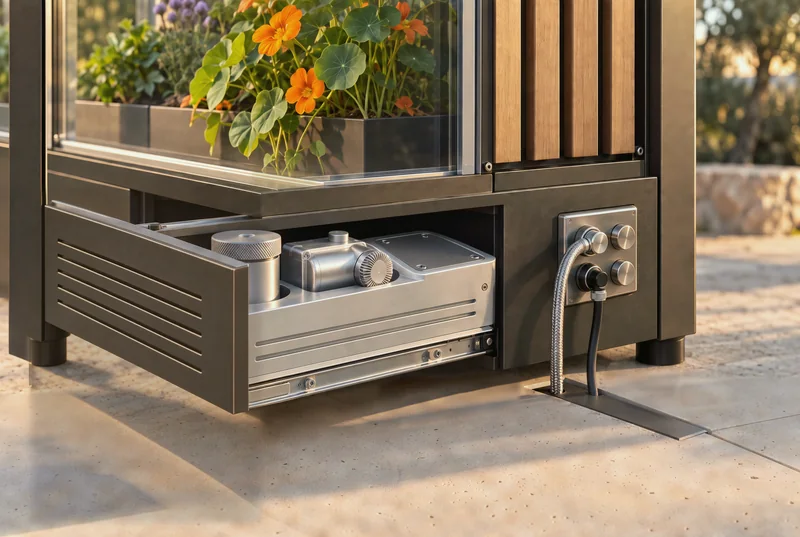
Utility core and couplings
The utility core slides out of the plinth for service. Water in, drain, power and data connect at one coupling block.
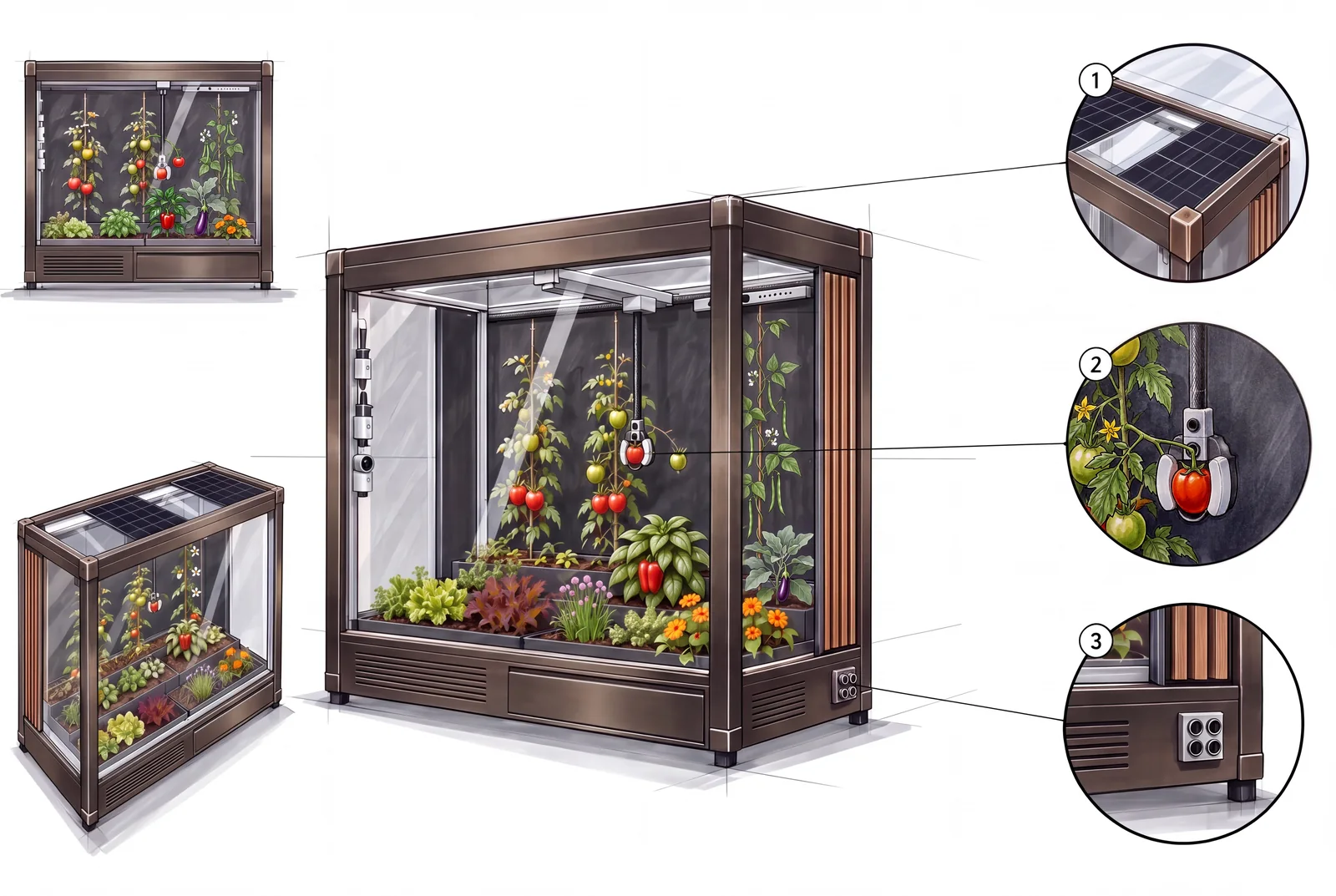
From sketch to general arrangement
Drawn as a system: sketch, general arrangement and exploded view.
Delivered in modules, assembled where it will grow
Verdwell One arrives as labeled flat-pack modules and is assembled where it will stand. Every installation starts with an assessment of the space.
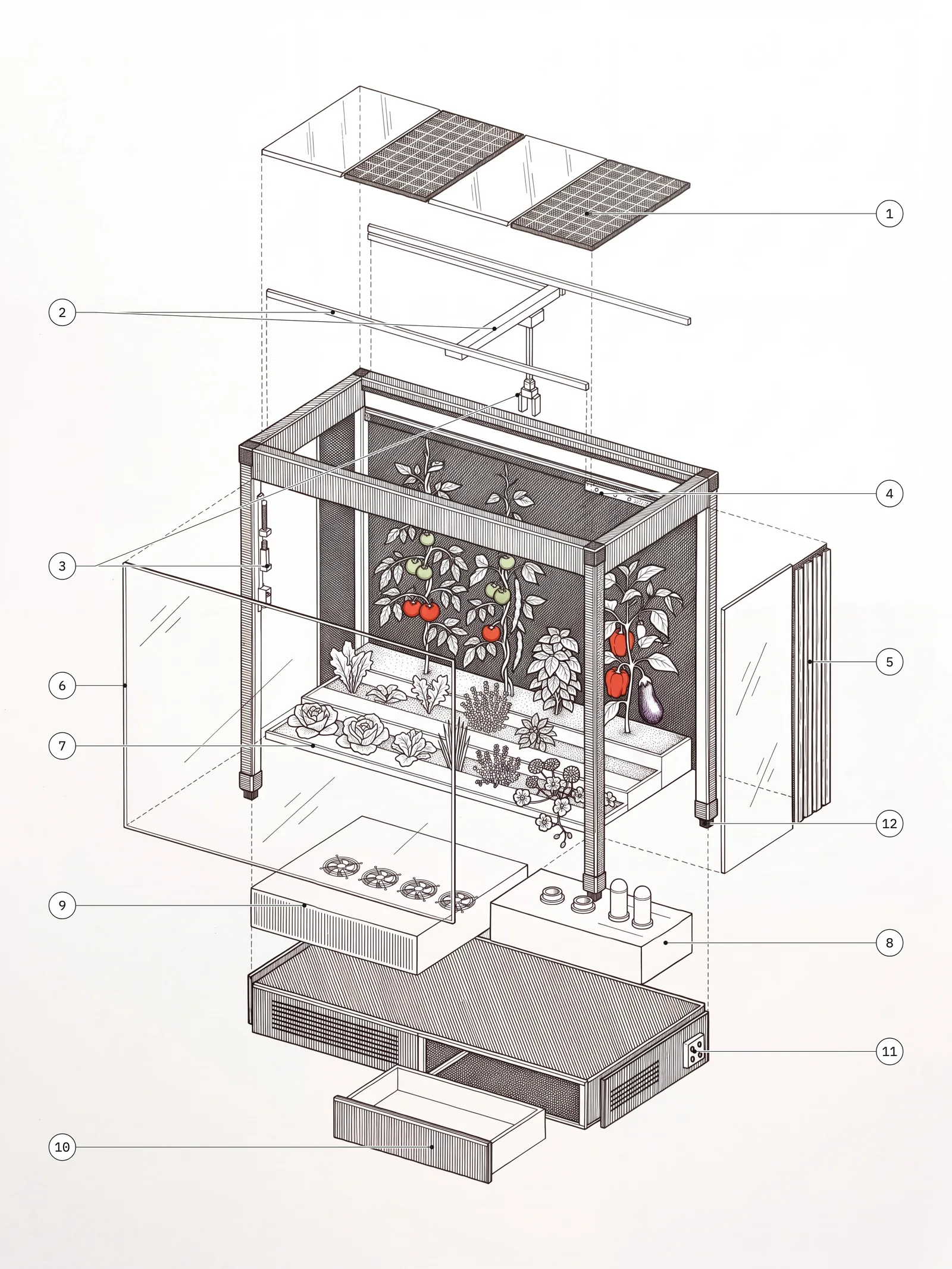
- Roof cassettes. Daylight glass and solar-cell glass; rain runs to the gutter on the rear beam.
- Traverse. Rails on the front and back top beams carry a bridge and a compact carriage.
- Tool head and tool dock. A carbon tube lowers the two-pad head; the dock on the front-left post holds a soft-tip wand, shrouded snips and a lens head.
- Vision. A two-lens bar on the back beam and lens windows in the upper corner blocks.
- Trim cassettes. Over the rear third: shade, insulation and the finish.
- Glass. One insulated front pane with a black edge seal; side glass over the front two thirds.
- Grow modules. Three stepped bed cassettes with drip lines, and cords for the canopy crops.
- Utility core. Water, nutrients and filtration.
- Climate and power module. Behind the vent field.
- Plinth and harvest drawer. The drawer opens to the front; a padded hatch in the front bed feeds it.
- Coupling block. Water in, drain, power and data.
- Leveling feet. Under the four corner posts.
- 01Unpack
Labeled modules, unpacked on site.
- 02Build the frame
Plinth, leveling feet, posts, beams and rails.
- 03Insert modules
Grow modules, the utility core and the gantry slide in.
- 04Fit the finish
Glass, trim cassettes and roof cassettes attach in sections.
- 05Connect
Water in, drain, power and data at one coupling block.
- 06Grow
Load your first crop and start the schedule.
Assembly in six steps. Every installation starts with a site assessment.
The installation assessment
Before anything is installed, we check:
- floor or deck load and level
- the access route to the spot
- sun, shade, wind and dust exposure
- water supply and drainage
- the electrical supply (outdoor installs use a suitable GFCI- or RCD-protected circuit)
- ventilation and humidity, for cellars and other closed rooms
- clearance to open and service the machine
- local rules, including landlord, building or community restrictions and limits on rainwater collection
08Film
Every climate
Sixty seconds, four places: a wine cellar, a terrace above the sea, a desert house and, as a design vision, a lunar habitat. Then inside the glass, where the tool head changes tools, pollinates the flowers and prunes the side shoots, and the harvest waits in the drawer.
This video can't play right now.
01 CellarAmong the racks, the cell keeps its own light. Then one frame in three finishes.
02 TerraceThe roof takes the sun and the rain, the plinth holds the utility core, and the vision bar watches every plant.
03 DesertHeat and dust outside, a layered garden behind the glass, titanium at the corners.
04 LunarThe same sealed cell, imagined in a lunar habitat.
05 ToolsThe head changes tools at the dock, pollinates the flowers and prunes a side shoot.
06 HarvestA ripe tomato goes down to the drawer. Your home. In season.
Read the script
- Your home.
- Designed as one sealed climate cell, finished for the room it lives in.
- In season.
- Every part does more than one job.
- Inside, a layered garden. Each plant supports the next.
- One machine. Every climate.
- And one day, further.
- Pollinated, pruned and harvested inside the glass.
- One gantry, a tool for every task, from flower to harvest.
- And when it's ripe, it's waiting for you.
- Verdwell. Your home. In season.
- Verdwell One. Your home. In season. Join the waitlist.
Shorter films
-
This video can't play right now.
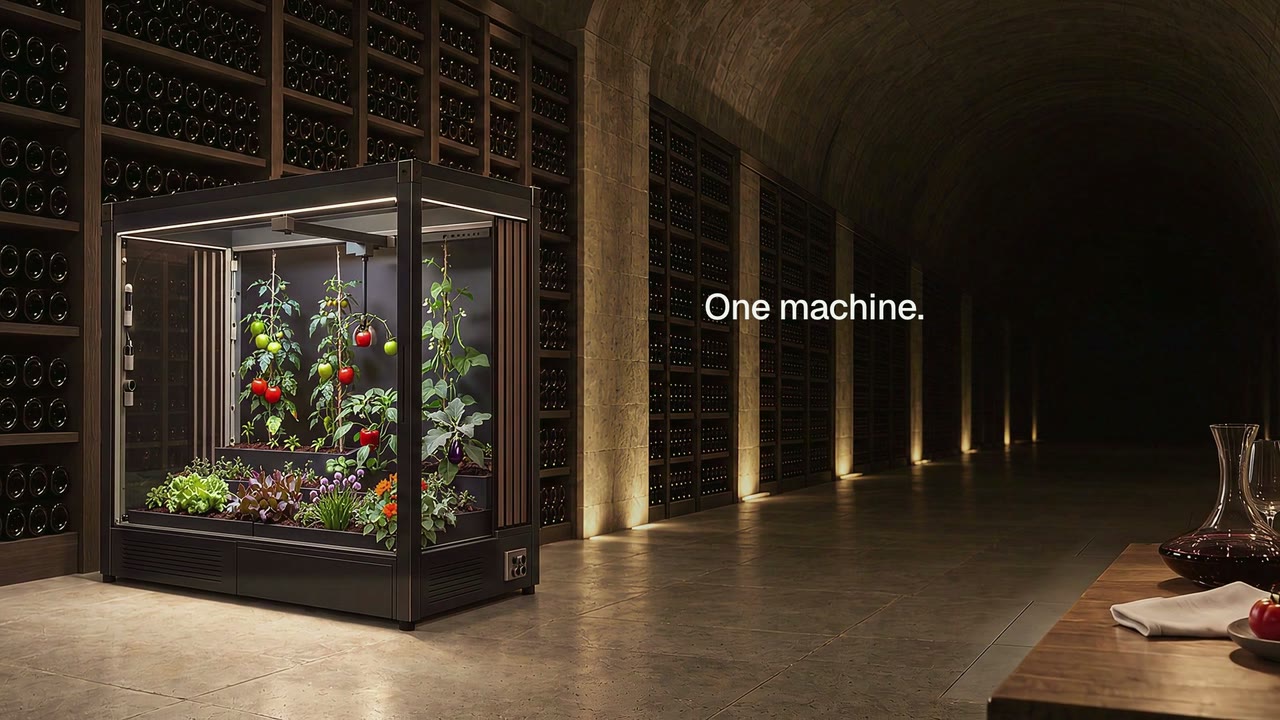
Fifteen seconds
Three climates, one tomato, in fifteen seconds.
-
This video can't play right now.
Thirty seconds, vertical
The same story, made for your phone.
09Ownership
Yours, without a subscription
Verdwell One is a premium machine, in the company of a wine-storage cabinet, an outdoor kitchen or the best equipment in a restaurant kitchen. We won't sell it as a way to save on groceries. It's for people, and for venues, who want to grow and eat this food where they live and work.
The machine
Hardware you own. Essential growing controls (light, irrigation, nutrient dosing and climate) never require a subscription.
Crop-input packs (optional)
Starts, growing media and nutrient cartridges matched to each layer. We'll publish specifications so you can use compatible inputs from other suppliers.
Verdwell Care (optional)
A service program for owners who'd like more support with their machine and their crops. Details come with pricing.
Every major part is modular and replaceable: trim cassettes, grow modules, the utility core, gantry tools and roof cassettes. Warranty terms are published with pricing.
First installations
A small number of homes and venues are invited to receive the first Verdwell One machines, with an installation assessment and a named contact. Mention it when you join the waitlist.
Your first crop, supported
New owners start with an installation assessment, starter inputs, onboarding and a named contact through the first harvest.
10Questions
Straight answers
Can I buy Verdwell One?
Not yet. We aren't taking orders, deposits or reservations. Join the waitlist and you'll hear first when that changes.
How much will it cost?
The price hasn't been announced. Verdwell One is a premium machine, and we won't sell it on grocery savings. The waitlist hears the price first.
When can I get one?
Timing will be announced to the waitlist first.
How big is it?
Sizes will be announced to the waitlist with pricing. Tell us about your space when you join, so we can plan around it.
How does it harvest?
The vision bar and the lens in the gantry's wrist find ripe fruit. The harvester's two soft pads close around it, a blade cuts the stalk, and the gantry lowers the fruit through a padded hatch in the front bed into the harvest drawer in the plinth. You can set any crop to hand harvest instead, and the app tells you when it's ripe.
What do I still do?
Choose the crops and load the starts, swap the nutrient cartridge when the app asks, and collect the harvest from the drawer. Now and then, wipe the glass and the drawer, change the filters and clear spent plants at the end of a crop. The app tells you when something needs a person, such as a pest or a blocked line.
How are the flowers pollinated?
In a sealed cell there are no bees and no wind. Tomato and pepper flowers release pollen when they vibrate, so the gantry's pollinator taps each open truss.
What can it grow?
Compact tomato varieties that carry full-size fruit, peppers and chilies, herbs, leafy greens, and seedlings and microgreens. It's planted as a guild, in layers, with companion flowers among the crops, and the crops are chosen to grow well together.
Where can it go?
Indoors or out. The Cellar finish is for wine rooms, dining rooms, kitchens and restaurants. The Terrace finish is for terraces, patios, rooftops and outdoor kitchens. The Expedition finish is for desert houses, mountain and coastal properties, remote lodges and field stations. Every installation starts with an assessment of the space.
Will the grow light bother my wine, or my neighbors?
The cell is sealed, and the Cellar finish's roof is light-tight, so the grow light stays inside. The cell is designed to manage its own warmth and humidity. Outdoors, you choose when the lights run.
Will I hear it?
Pumps, fans and the gantry make some sound when they run. You choose the hours the gantry works.
Does it run on solar?
Solar helps. The Terrace and Expedition roofs take solar cassettes that supplement the supply, and every Verdwell One connects to mains power.
What does it need for power and water?
One coupling block for water in, drain, power and data. The site assessment checks your supply, drainage and circuit. Outdoor installs use a suitable GFCI- or RCD-protected circuit.
Is the lunar habitat real?
It's a design vision. The sealed cell is engineered for hard places, and a lunar habitat is where that idea leads: a sealed garden that keeps its own climate is the purest form of it.
Can it grow through winter?
It's designed to heat, light and insulate its own cell, so a cold season outside doesn't stop the one inside. In cold weather it uses more electricity to do it.
Do I need a subscription?
No. Essential growing controls (light, irrigation, nutrient dosing and climate) never require a subscription. Crop-input packs and Verdwell Care are optional.
Does it need the internet?
Essential growing controls are designed to run on the machine itself. The app adds the daily photos, alerts, harvest notes and remote control.
Can I use my own seeds and nutrients?
Yes. We'll publish specifications for compatible varieties, growing media and nutrients, so you aren't tied to our packs. For tomatoes, choose compact varieties.
What do the cameras see?
The cameras point into the growing cell, at the plants. The product privacy notice will set out what's captured, where it's processed, who can view it (including any Verdwell support staff) and how long it's kept.
Will it save me money on groceries?
No, and we won't claim it will. It's for growing and eating food you care about, at home.
What about service and warranty?
Every major part is modular and replaceable, and Verdwell Care adds optional support. Warranty terms are published with pricing.
Can a restaurant or bar have one?
Yes. The Cellar finish is made for dining rooms and restaurants, and venues can join the waitlist too. Tell us it's for a venue when you do.
How are the first machines placed?
A small number of homes and venues are invited to receive the first machines. We choose them by space and climate, so not everyone who asks can be selected. Terms, including any costs, are set out in writing before anything is installed.
11Waitlist
Join the waitlist
The waitlist hears first about price, timing and the first installations. Free to join. No payment, no commitment.
By invitation
Verdwell One is shared by invitation. To join the waitlist, reply to the person who shared this page with you.
Tell us where it would stand, which finish suits the space and what you'd grow first. That's all we need.
- Where it would stand: a wine room, a kitchen, a terrace or a desert house
- The finish: Cellar, Terrace or Expedition
- What you'd grow first
- Whether it's for a home or a venue
You must be 18 or older to join.